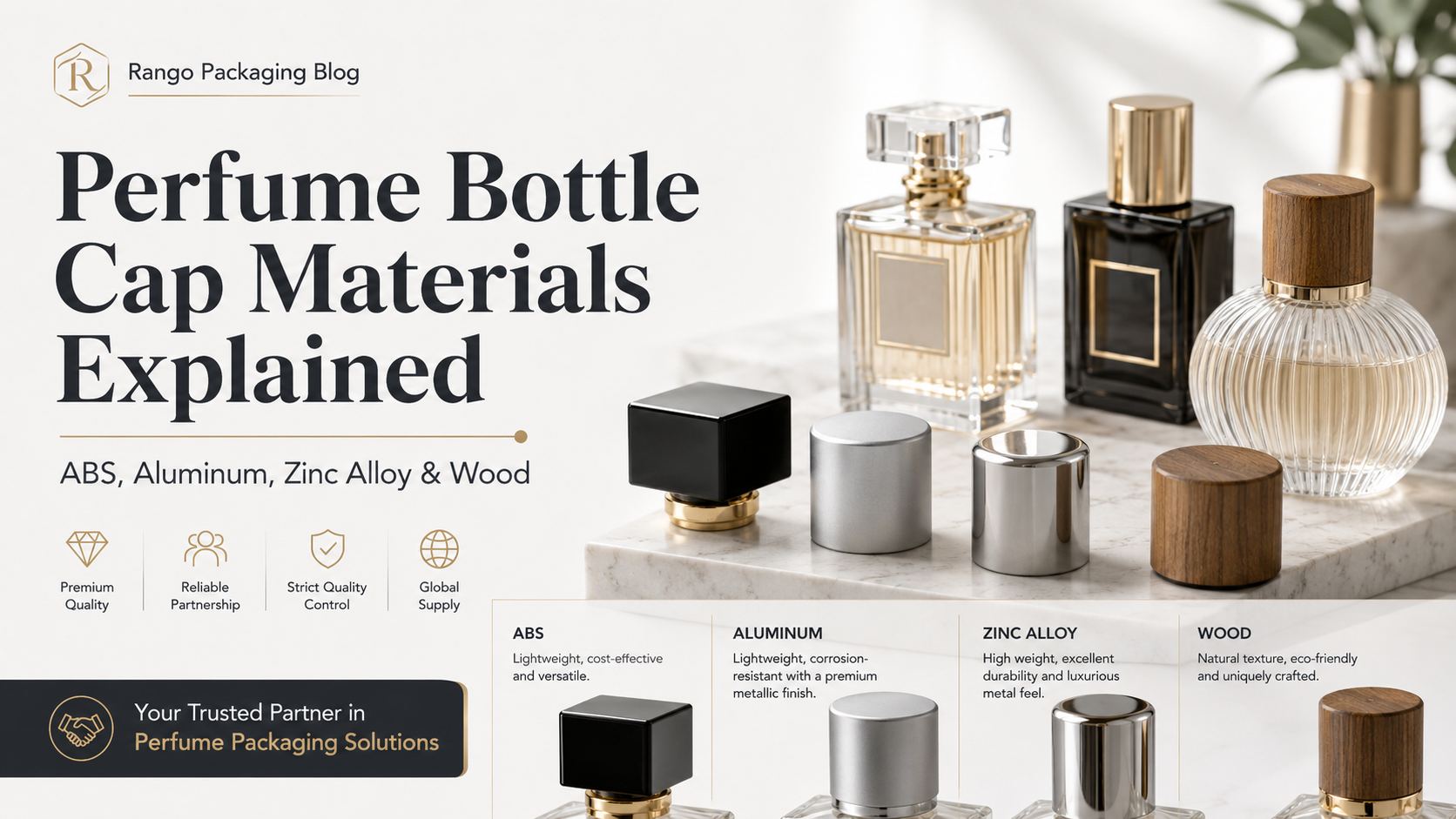
The cap is the first thing a customer touches and the last thing they close. Its material decides weight, finish quality, cost and how the whole pack is perceived.
ABS (plastic)
The most widely used perfume cap material.
- Strengths: low cost, light, easy to mould into complex shapes, accepts spray coating, metallisation, electroplating and soft-touch finishes
- Considerations: light in hand; metallised coatings can scratch if the finish quality is poor
- Best for: value ranges, large-volume launches, and any design needing a complex shape at reasonable cost
An ABS cap with quality electroplating can look identical to metal on a shelf — the difference is felt, not seen.
Aluminium
- Strengths: genuine metal feel, clean brushed or anodised finishes, recyclable, moderate weight
- Considerations: limited to simpler geometries; anodised colour matching requires careful control
- Best for: minimalist and contemporary designs, unisex ranges, brands with a sustainability message
Aluminium caps are often built as a metal shell over a plastic insert that carries the fitment.
Zinc alloy
- Strengths: substantial weight and premium hand-feel, holds fine cast detail such as logos and reliefs, supports plating in gold, chrome, gunmetal and matte finishes
- Considerations: highest cost of the common options, heavier shipping weight, needs plating quality control
- Best for: niche and luxury fragrances where perceived value is the priority
Weight is the strongest non-visual luxury signal in packaging. Zinc alloy is how most brands buy it.
Wood
- Strengths: natural texture, warm appearance, strong fit with oud, woody and artisanal positioning; each piece has unique grain
- Considerations: natural colour variation between pieces, sensitive to humidity, requires sealing, longer production time
- Best for: oud, niche naturals, and heritage-style ranges
Surface finishes across materials
- Electroplating — gold, silver, chrome, gunmetal
- Spray coating — matte, gloss, soft-touch
- Anodising — aluminium only
- Hot stamping and pad printing for logos
- Laser engraving on metal and wood
Fitment matters as much as material
Whatever the material, the cap must sit concentrically over the collar and hold securely without excessive force. Confirm:
- Inner insert type and grip tolerance
- Cap height relative to the sprayer
- Whether the cap stays on during transport drop tests
Choosing by budget and positioning
| Material | Relative cost | Perceived value | Typical use |
|---|---|---|---|
| ABS | Low | Medium (high when plated) | Mass and mid-market |
| Aluminium | Medium | High | Modern, minimalist |
| Zinc alloy | High | Very high | Niche and luxury |
| Wood | Medium–high | High, distinctive | Oud, natural, artisanal |
Sourcing notes
Caps are a separate SKU from the bottle, with their own tooling and MOQ. Standard MOQ is 5,000 pcs per SKU, samples run 7–15 days from existing tooling plus 7–10 days when surface decoration is applied, and terms are 30% deposit with the 70% balance before shipment.
Always approve the cap on the actual bottle, with the actual collar — a cap that looks right in isolation can throw off the proportions of the whole pack.