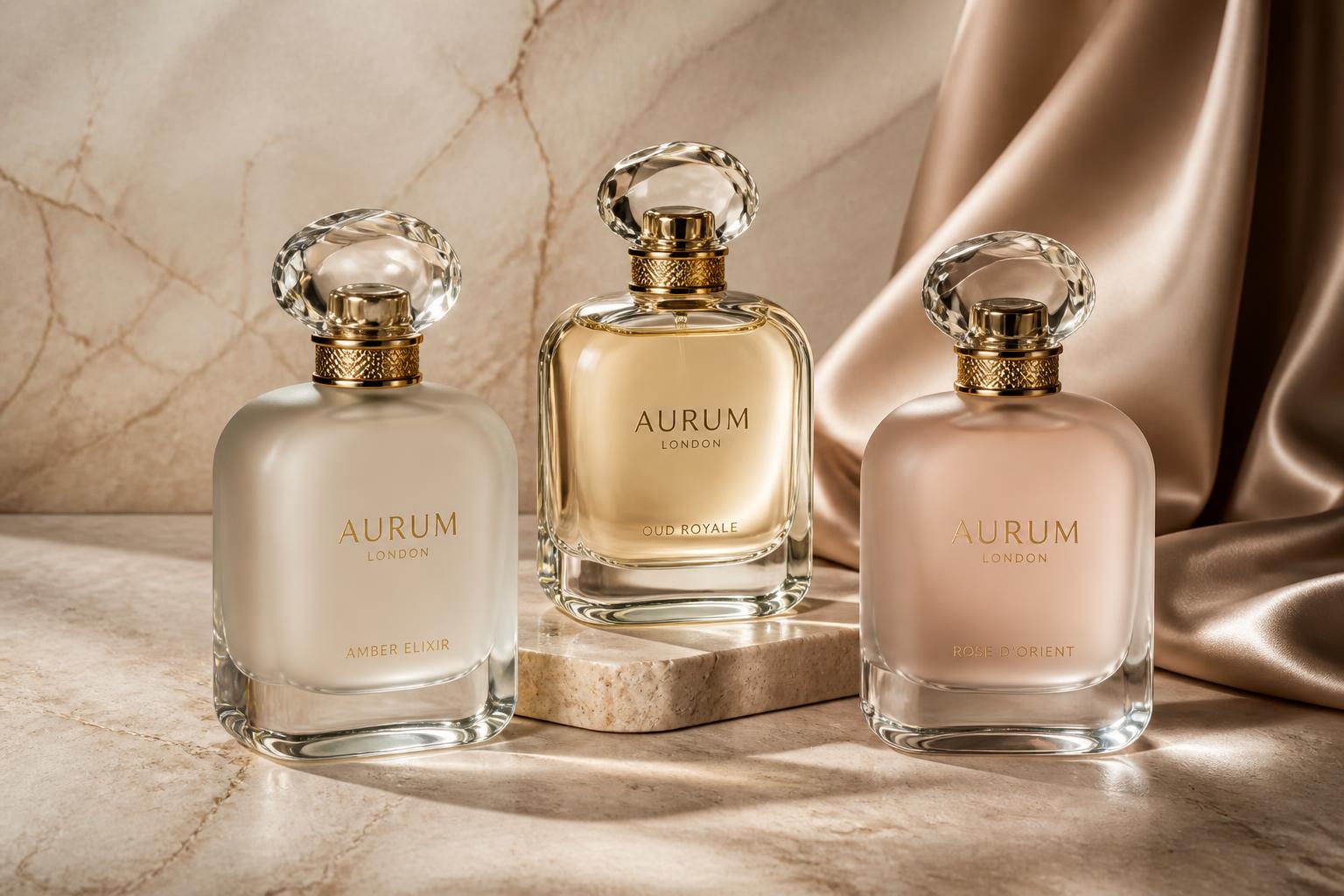
Le design d'un flacon de parfum de luxe en verre est le levier le plus sous-estimé du branding de parfumerie moderne. Avant même qu'un client ne retire le capot, le poids, la clarté optique, la courbe de l'épaulement et le contact froid du verre premium lui ont déjà indiqué la valeur du sillage. C'est le luxe invisible — la partie du flacon qu'un acheteur ressent mais ne peut nommer. Dans ce guide ultime, nous détaillons comment sélectionner et concevoir des flacons de parfum en verre haut de gamme qui évoquent une élégance discrète en rayon, en main et à l'image.
1. Pourquoi le luxe réside dans le verre, pas dans l'étiquette
Les flacons de parfum grand public misent sur l'impression et la couleur. Les flacons de luxe misent sur l'honnêteté des matériaux : bases épaisses, verre flint sans défaut, cols rectifiés avec précision, poids délibéré. À coût de production égal, le flacon le plus lourd et le plus pur optiquement est presque toujours perçu comme 2 à 3 fois plus cher. Avant le logo, avant le capot, avant l'étui — c'est le verre qui décide du positionnement.
Signaux clés de valeur perçue que nos clients nous demandent de concevoir :
- Épaisseur de la base de 18–35 mm (contre 6–10 mm pour le marché de masse)
- Poids total du flacon de 180–420 g pour une SKU de 50–100 ml
- Verre flint de qualité cristal sans teinte verte/bleue en vue latérale
- Invisibilité des joints de soudure (ligne de jointure ≤0.15 mm)
- Sensation de "coulée froide" — masse importante au niveau de la couronne / de l'épaulement dès la prise en main
2. Matériau verrier : flint, extra-flint et effet cristal
Tous les verres transparents ne se valent pas. Pour un positionnement premium, spécifiez le matériau dans votre cahier des charges technique — ne le laissez jamais au choix par défaut de l'usine.
- Flint standard — entrée de gamme luxe, légère teinte verte, transmission lumineuse d'environ 88%. Acceptable pour les jus teintés.
- Extra-flint (faible teneur en fer) — transparence absolue, transmission d'environ 92%. Le choix par défaut pour les flacons de prestige.
- High-white / effet cristal — Fe₂O₃ contrôlé à <100 ppm, utilisé par les maisons de niche. Coût le plus élevé, mais rivalise visuellement avec le cristal soufflé à la bouche.
- Dépoli / satiné — gravure à l'acide ou sablage après moulage. Ajoute 8–15% au coût ; évoque la douceur, idéal pour les familles florales et muscs blancs.
3. Langage des formes : ce que chaque silhouette communique
La silhouette est la déclaration de positionnement silencieuse de la marque. Choisissez délibérément :
- Flacon rectangulaire à base lourde — classique, masculin, parfumerie de "maison" (type Dior, Tom Ford). Polyvalent et facile à imprimer.
- Carré adouci / coussin — luxe unisexe moderne. Adapté au marquage à chaud et à la sérigraphie.
- Cylindre haut — minimaliste, éditorial, niche. Plus difficile à remplir sur les lignes automatisées ; exige une haute qualité de verre.
- Sculpté / asymétrique — couture et éditions limitées. Nécessite des moules spécifiques (USD 6,000–18,000) et un MOQ d'au moins 5,000–20,000 pcs pour amortir les frais.
- Facetté / effet verre taillé — réfracte magnifiquement la lumière sous les éclairages de boutique, mais ajoute 10–20% de complexité au moule.
4. Le système de fermeture représente la moitié du luxe
Les acheteurs évaluent un flacon par son rituel de fermeture — le clic, la résistance, l'attraction magnétique. Travaillez-le.
- Pompe à sertir (FEA 15) — standard de l'industrie, fixée en usine. Dissimulée sous un capot décoratif.
- Capot magnétique en surlyn / Zamak — le "clic satisfaisant". Ajoute 0.5–1.2 USD/pc mais transforme l'expérience de déballage.
- Capot en Zamak lesté — 25–80 g, plaqué or/argent/canon de fusil. L'amélioration unique ayant le plus d'impact sur la valeur perçue.
- Capots en bois, céramique ou pierre — pour les marques de niche axées sur le storytelling. Vitesse de ligne plus lente ; à prévoir au budget.
5. Décoration : là où la plupart des marques gâchent un beau flacon
Un flacon à USD 1.20 devient un flacon à USD 0.40 dès que la décoration est ratée. Les règles du luxe :
- Moins d'encre, plus de verre. L'espace vide est le matériau le plus cher sur le flacon.
- Le marquage à chaud (or/or rose/argent) surpasse l'encre dorée imprimée à tous les niveaux de prix.
- Sérigraphie avec encre céramique basse température pour des logos mats qui résistent à plus de 10,000 cycles de frottement.
- Verre embossé/débossé dès l'étape du moule — pas d'encre, pur jeu de lumière, durabilité infinie.
- Impression numérique UV uniquement pour les petites séries (<5,000 pcs) ou les visuels photoréalistes ; spécifiez un vernis de protection transparent.
Pour une comparaison approfondie des technologies d'impression — numérique, sérigraphie et flexo — et savoir quand choisir chacune, consultez notre guide de comparaison de l'impression sur flacons de parfum.
6. Couleur : verre teinté vs couleur portée par le jus
Vous avez deux voies pour obtenir un flacon coloré :
- Verre teinté dans la masse (couleur dans la fusion) — uniforme, permanent, et requis pour un positionnement ambre/cobalt/violet. Nécessite une campagne de four dédiée ; MOQ typiquement de 20,000+ pcs.
- Verre laqué par pulvérisation — n'importe quel Pantone, faible MOQ (5,000 pcs), mais sensible aux rayures. Spécifiez toujours un vernis UV et passez le test d'adhérence cross-hatch ASTM D3359.
- Dépoli intérieur avec jus clair — l'effet "éclat lacté" populaire pour les lancements de niche 2024–2026. Obtenu par lavage acide interne.
7. La fiche technique luxe — ce qu'il faut réellement envoyer à l'usine
Lorsque vous briefez une usine, envoyez ces huit indicateurs. Ils font la différence entre un échantillon réussi et un échantillon qui doit être retouché deux fois.
- Capacité (ml) et capacité à ras bord (ml)
- Poids total du flacon (g), tolérance ±5%
- Épaisseur de la base (mm), minimum
- Bague (FEA 15 / FEA 13 / sur mesure) et tolérance d'ovalisation
- Type de verre (flint / extra-flint / high-white)
- Niveau de défauts autorisé (AQL 2.5 pour majeur, 1.0 pour critique)
- Position de la décoration avec coordonnées 3D, pas de maquettes 2D
- Exigence de recuisson (obligatoire pour les flacons à base épaisse)
8. La durabilité fait désormais partie du luxe
L'acheteur de luxe de 2026 lit la fiche technique. Trois leviers crédibles :
- Verre flint PCR (recyclé post-consommation) jusqu'à 40% sans perte optique
- Allègement du corps tout en conservant la masse de la base — l'approche du "poids là où ça compte"
- Architecture de recharge — flacon intérieur magnétique ou à vis, coque extérieure conservée à vie
9. Réalité des MOQ, de l'outillage et des délais
- Flacons de luxe sur stock (notre catalogue) : MOQ à partir de 5,000 pcs, délai 25–35 jours décoration incluse.
- Moule personnalisé (semi-bespoke) : MOQ 10,000 pcs, outillage USD 4,500–9,000, délai 55–70 jours.
- Flacon sculpté entièrement sur mesure : MOQ 20,000 pcs, outillage USD 8,000–22,000, délai 80–110 jours.
10. L'audit luxe en 30 secondes
Tenez le flacon fini à bout de bras sous une lumière froide de 4000K. Demandez-vous :
- Se photographie-t-il sans éclairage d'appoint ? (Clarté optique)
- Pose-t-il parfaitement à plat sans basculer ? (Planéité de la base)
- Le capot fait-il "clic" — ou "clac" ? (Poids de la fermeture)
- Le joint est-il repérable à l'œil nu ? (Précision du moule)
- Replaceriez-vous le flacon vide sur une étagère chez vous ? (Valeur d'objet)
Si vous pouvez répondre "oui" cinq fois, vous avez un flacon de parfum de luxe. Sinon, c'est généralement au niveau du brief — et non de l'usine — que le projet a échoué.
Prêt à concevoir votre propre flacon de parfum de luxe ?
Nous avons conçu des flacons de parfum en verre de luxe personnalisés et semi-personnalisés pour plus de 200 marques à travers l'UE, les États-Unis et le Moyen-Orient — des lancements de niche de 5,000 pcs aux déploiements retail de 500,000 pcs.
Obtenez un devis gratuit pour votre flacon de parfum personnalisé en 24 heures → Prix direct usine · MOQ à partir de 5,000 pcs · Bon à tirer numérique et rendu 3D gratuits sous 24 heures · Email : sales@rangopack.com